 Petal Home
Home / Blog / School Open Evenings: What to Look For, and What to Ask
School Open Evenings: What to Look For, and What to Ask

Open evenings are when schools look their best: the displays are fresh, the science experiments are fizzing, and the head's talk is polished. That's fine, but it makes schools hard to tell apart. The trick is to look past the show for a few everyday things, ask the same questions everywhere, and score each school the same way before the details blur.
The quick answer
- Before: read the school's latest inspection report and admissions criteria, so you can use the evening for what paperwork can't tell you
- During: watch how pupils and staff talk to each other, and ask the same five questions at every school
- After: score each school on the same headings that evening, and ask your child first
This guide focuses on secondary school visits in England. The questions themselves work anywhere, but inspection and admissions systems differ across the UK. If you're applying in England this year, the deadline is Saturday 31 October 2026. Our guide to secondary school applications covers the dates and how the application works. This one is about the visits themselves.
Before you go: do the reading at home
Some of what you want to know is already published. Read the school's latest inspection report (Ofsted, in England), look at its published performance information, behaviour policy and clubs, and check the admission criteria, so you know how your child matches them. That frees the evening for the things you can only find out in person.
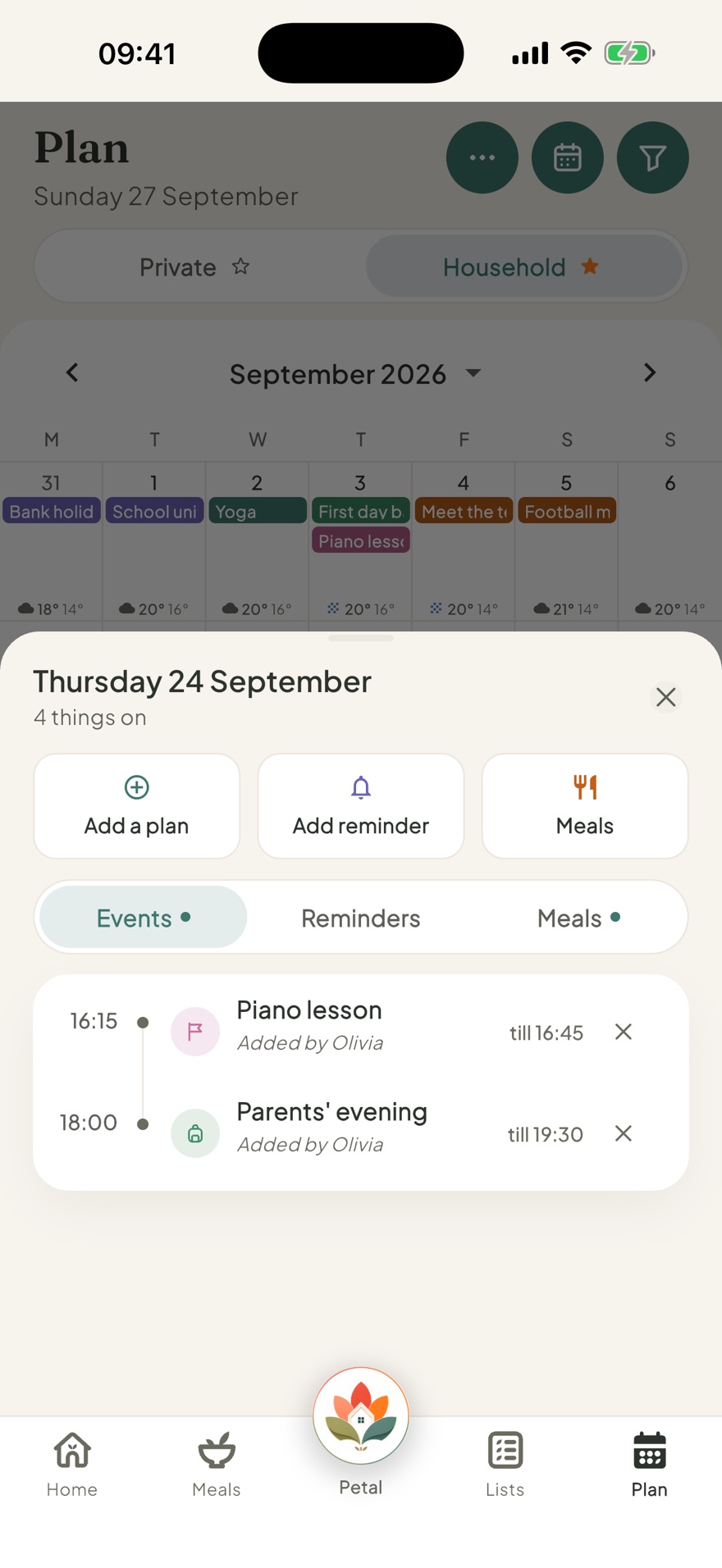
Some schools also offer daytime tours during a normal school day, which show you lessons as they really are. Put each open evening and tour on the family calendar as you book them. In Petal Home, household plans are free, each one can have a note and a reminder before it, and everyone in the household sees the same weeks.
What to look for on the night
- Pupils between rooms: are they relaxed and chatting, and do they hold doors and talk to visitors easily?
- Staff with pupils: how do teachers speak to the pupils helping out, and do the pupils seem comfortable with them?
- The pupil guides: ask them what they'd change about the school. Their honest answer often tells you more than the head's talk
- Everyday corners: the corridors, the library, the toilets and the canteen, not just the showcase rooms
- Your child: where they lingered, what they asked about, and whether they could picture themselves there
Five questions to ask at every school
Ask the same questions everywhere, so you can compare the answers fairly:
- How do you help Year 7s settle in? Transition days, form tutors and who they can go to
- How are Year 7 pupils grouped, and what is a typical class size? And does that vary by subject?
- What support is there if a child is struggling, with work, friendships or additional needs? If your child has SEND, ask how the support described in the school's SEND information report works day to day
- How do you keep in touch with parents? Apps, emails, reports and parents' evenings
- What happens outside lessons? Clubs, sport, music and trips, and whether they cost extra
After: a simple scorecard
Score each school that evening, while it's fresh, on the same headings, from one to five: feel (how it felt to your child and to you), getting there, support and outside lessons. Add a short note, rather than a score, on admissions fit: how your child matches the published criteria. Ask your child for their scores first, before you share yours, so their view isn't just an echo of yours. The scores won't make the decision for you, but they make the conversation much easier when it comes to choosing the order.
In Petal Home, the scorecard can be a list with a section for each school, and an item for each thing you're scoring, with a note for the score and a line on why. You can share it with the household or limit it to just the adults, and lists, sections and notes are free.
If you can, go back for a second look at your top one or two schools during a normal school day. A tour on an ordinary Tuesday morning can confirm, or change, your impression from a busy open evening.
Frequently asked questions
What should I look for at a school open evening?
Look past the displays at everyday things: how pupils behave between rooms, how staff speak to pupils, what the pupil guides say they'd change, and the ordinary spaces like corridors and the canteen. Notice where your child lingers and what they ask about.
What questions should I ask at a secondary school open evening?
Ask how they help Year 7s settle, how Year 7 pupils are grouped and what a typical class size is, what support there is if a child is struggling, how they keep in touch with parents, and what happens outside lessons. Asking the same questions at every school makes the answers easier to compare.
How do we compare schools after visiting?
Score each school that evening on the same headings, like feel, getting there, support and outside lessons, with a short note on how your child matches the admission criteria. Ask your child for their scores first, then talk it through before deciding your order.
Are daytime tours worth it as well as open evenings?
Often, yes. A tour during a normal school day shows lessons and corridors as they really are, which can confirm or change your impression from a busy open evening.
One calm place for the whole family
Petal Home is being built to help families keep meals, lists, calendars and reminders in one calm shared space. If that sounds useful for your household, you can join the waitlist and we'll let you know when it launches.
Join the waitlist